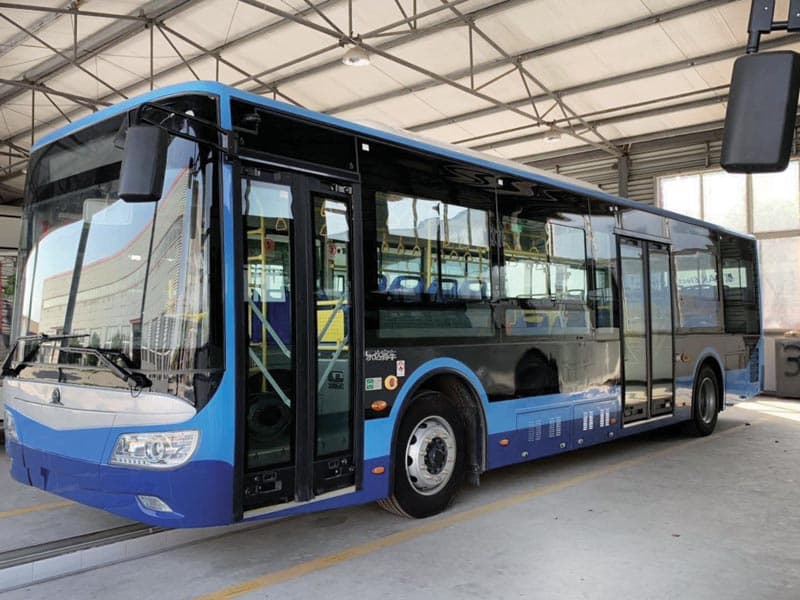
Nepal's unified interoperable network for travel.
TripBus turns fleet owners into trusted supply nodes and gives booking platforms a shared API layer for live routes, seats, trips, dispatch, and reconciliation.
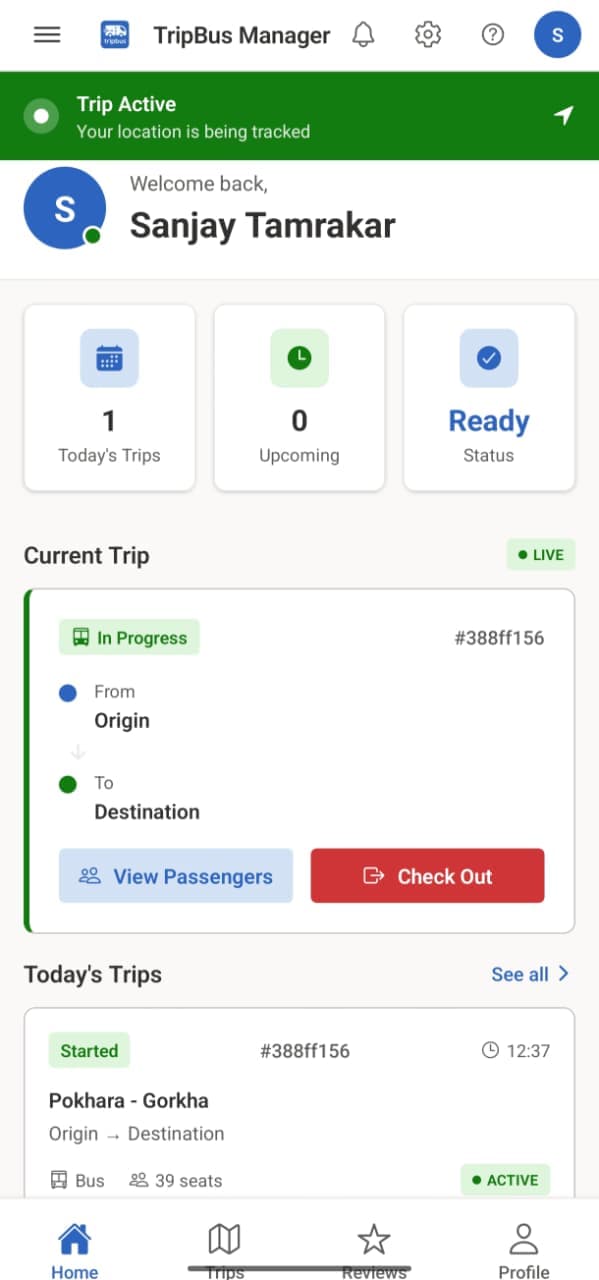
Fleet supply becomes network infrastructure.
Instead of each booking platform building direct one-off integrations with every bus operator, TripBus creates a shared operating layer: fleet owners maintain the master data, and partners consume reliable transport state.
Operators become source nodes
Fleet owners maintain the truth: vehicles, routes, crews, seats, trips, and live operations.
TripBus normalizes the graph
Operational data becomes structured network state instead of disconnected spreadsheets and dashboards.
Partners connect to rails
Booking systems can discover, reserve, reconcile, and monitor supply through a shared interface.
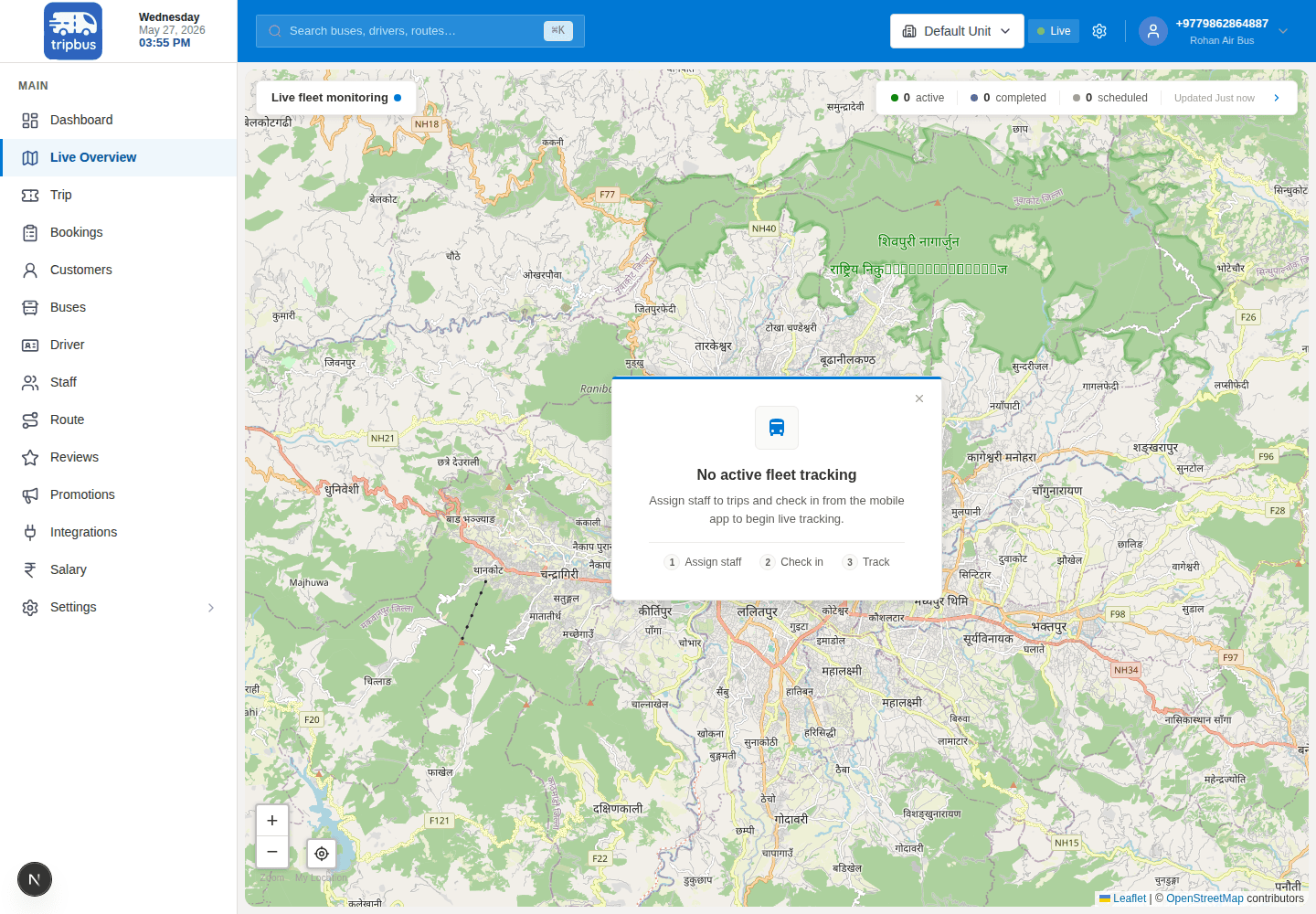
Movement feels like a living network.
The live map is not another admin screen. It is the operating picture for dispatchers, owners, and future partners watching trusted bus supply move through the city.
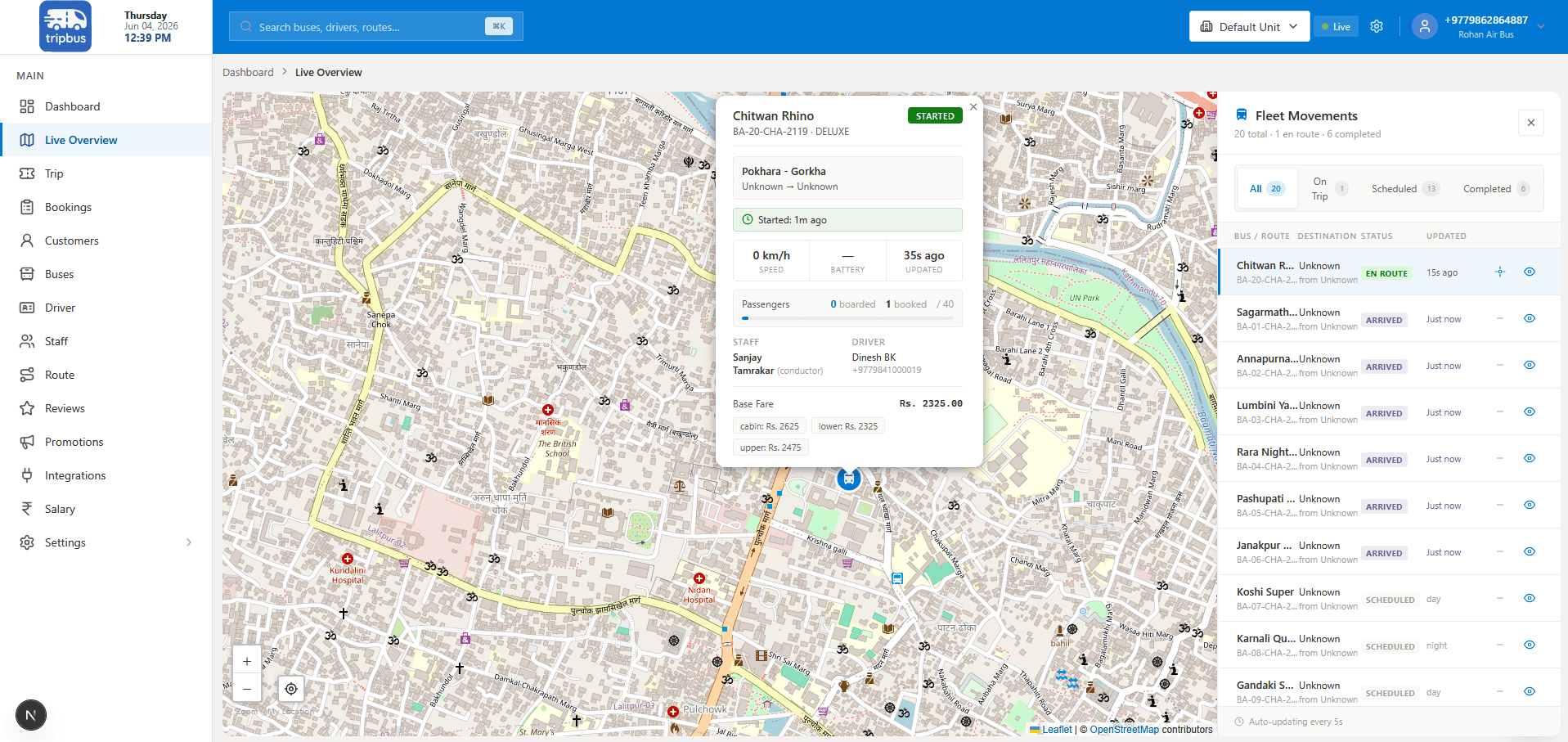
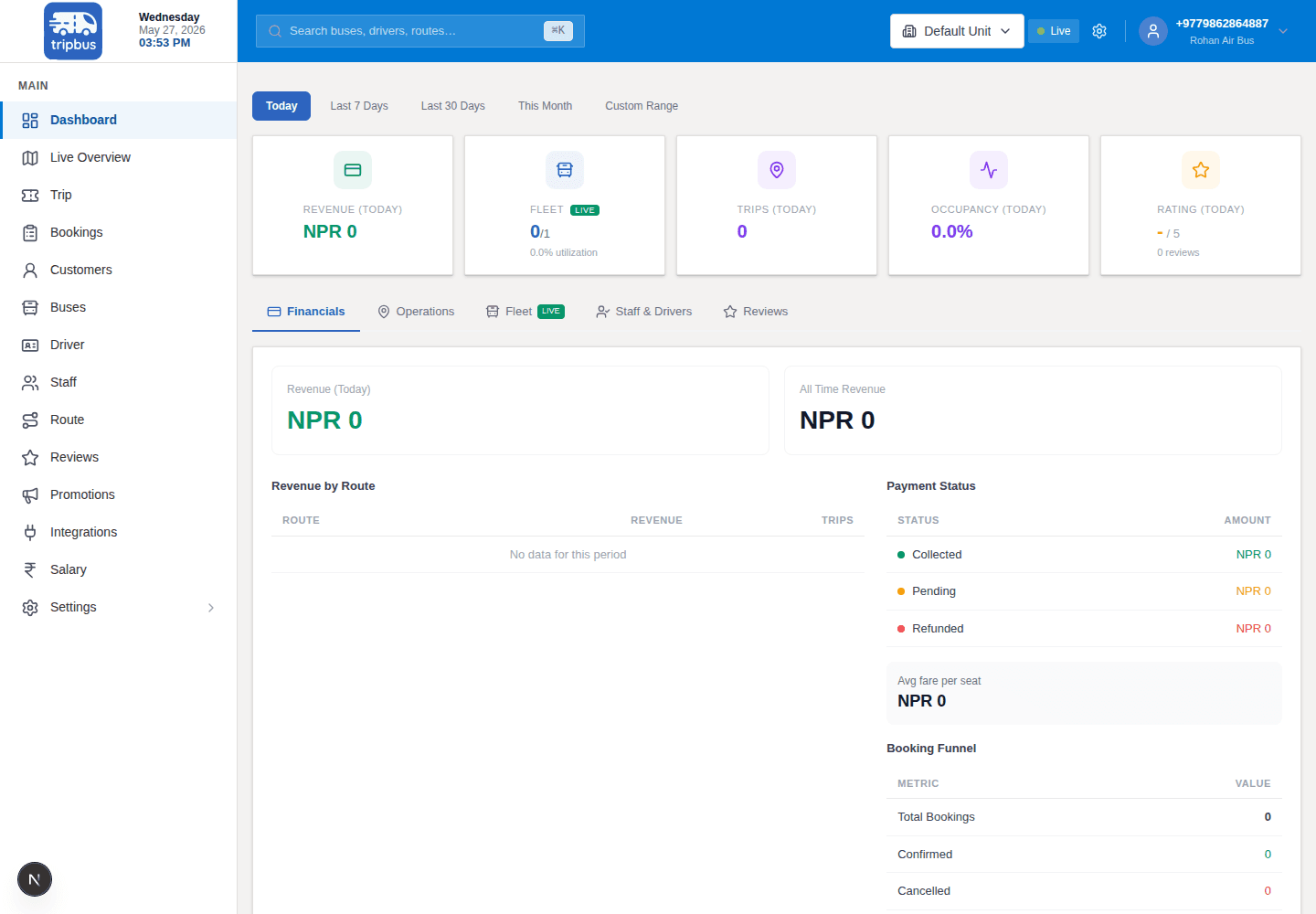
The dashboard is the issuing console.
The operator console is where the network gets its trusted data: trips, fleet, route economics, customers, staff, and live operations. The screenshot is shown fully so the product feels real and inspectable.
The primitives behind a travel network.
Master transport registry
A trusted database for buses, seats, routes, schedules, staff, owners, depots, pricing, and operating units.
Live network state
Every active trip can expose fleet position, operating status, occupancy, and dispatch context in real time.
Interoperable API layer
Booking platforms, agents, and future travel products connect to the same transport supply graph.
Governed access
Tenant-aware permissions, operational roles, authenticated access, and clean audit paths for partners.
Network scale, bus management depth.
It should feel like infrastructure, but the operating model remains practical for the bus industry: depots, seats, staff, routes, trips, live location, and route-level revenue.